

Voices of a Silent River
How the salmon collapse threatens Indigenous life along the Yukon
Story and Photos By: Christian Martischius
As the paddle cuts through the cold, murky waters of the Yukon, the gaze drifts over the vast expanse of the river. The erosion-ravaged banks lie hundreds of meters away, and the packrafts appear like tiny specks on the wide current. Apart from the soft, almost hypnotic lapping against the bow, there is complete silence. Loneliness and exposure hang heavy over the water.
If “wilderness” were more than the idea of an artificial separation between humans and nature—used, then as now, to legitimize colonial domination and land appropriation—it would surely be calling out now. Yet it remains silent.
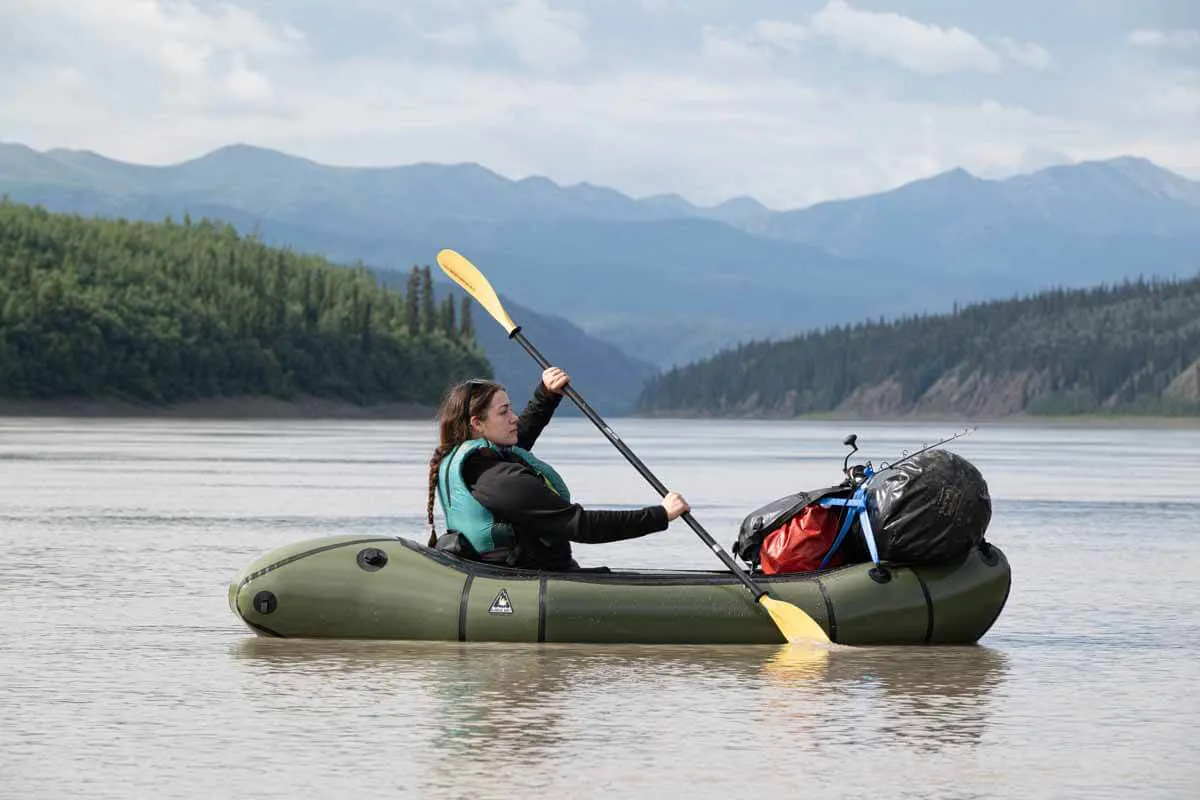
Moving slowly through a river that no longer runs with salmon.
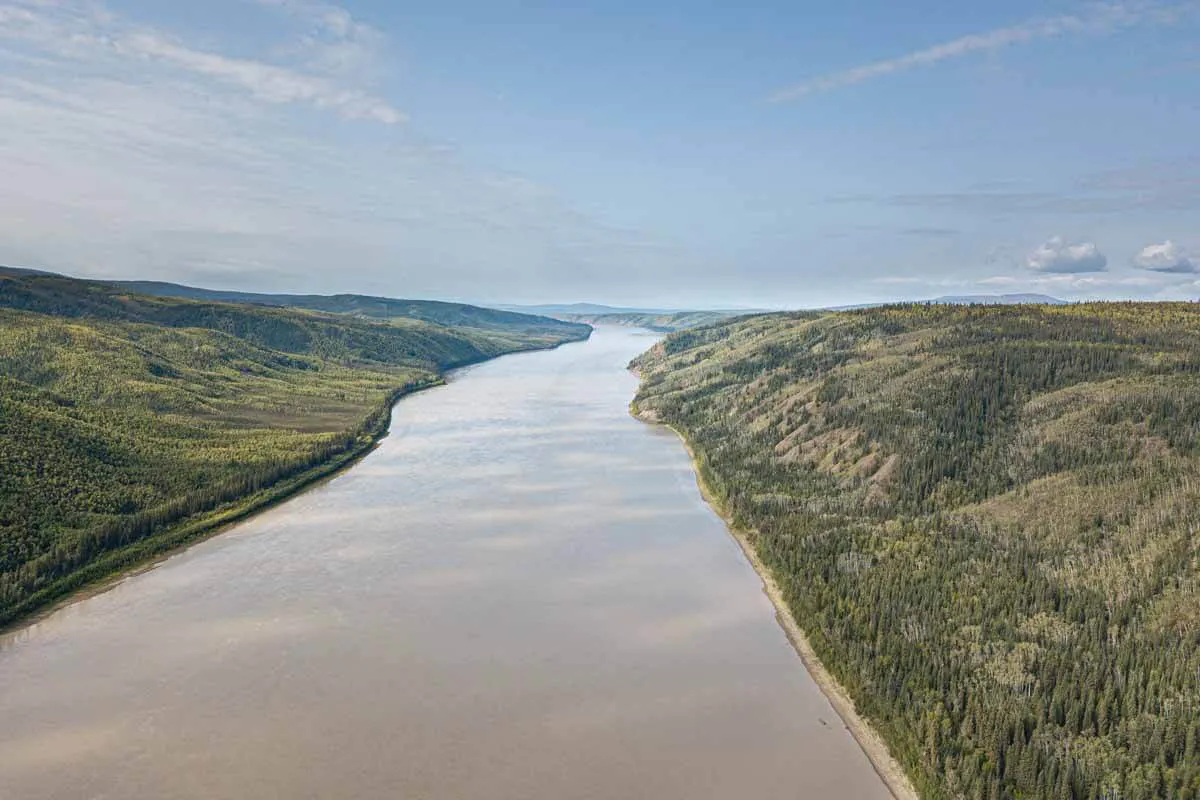
The Yukon River, a vast system strained by decisions made far beyond its banks.
And still: it is far from abandoned. It lives, pulses, breathes. Nearly seventy Indigenous communities exist within the Yukon’s watershed. Bears, wolves, moose, and wolverines move through its forests and thickets. And for millennia, millions of salmon swam upriver—a silvery thread of life that nourished people and sled dogs alike, and carried stories, songs, and ceremony along its flow.
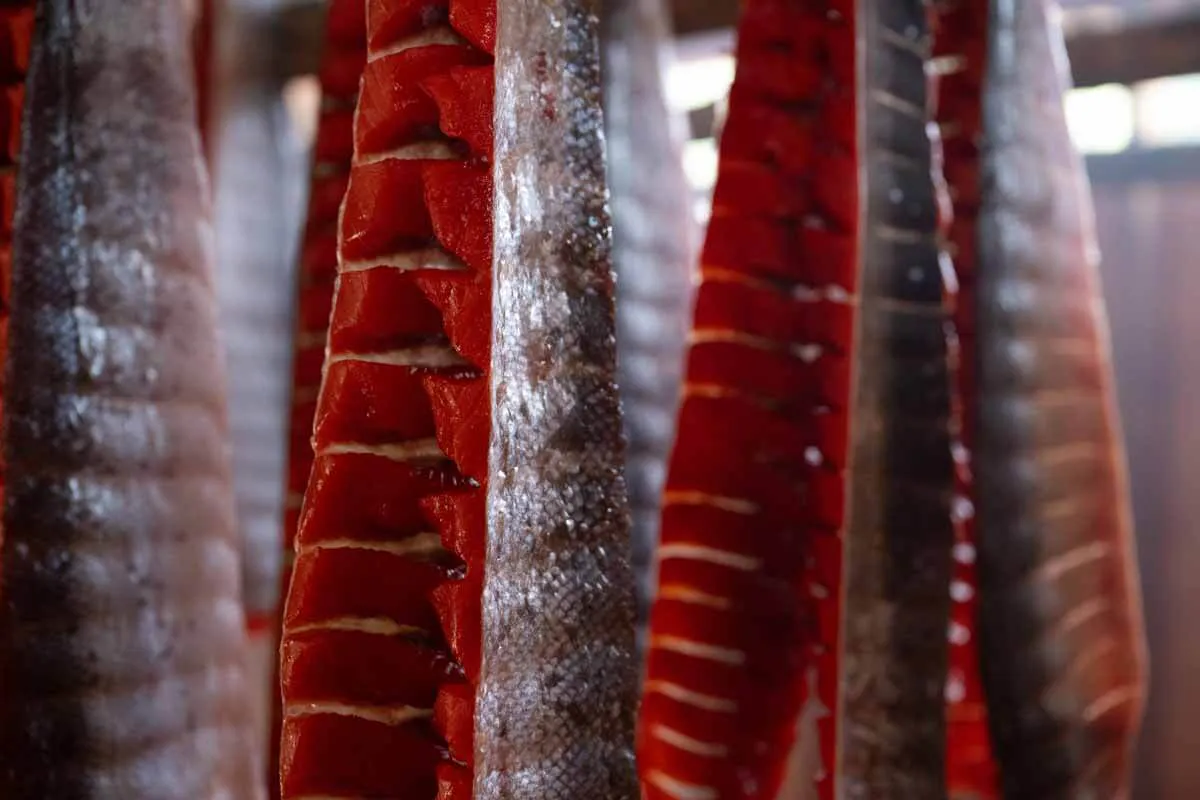
The color of abundance—now increasingly rare.
But that thread has been broken. The collapse of the salmon leaves a void that extends far beyond empty smokehouses and abandoned fishing camps. It threatens identity, culture, and continuity—the very fabric of the “Salmon People.” What once moved in seasonal rhythm has fallen silent, and in that silence, the loss echoes louder than ever.
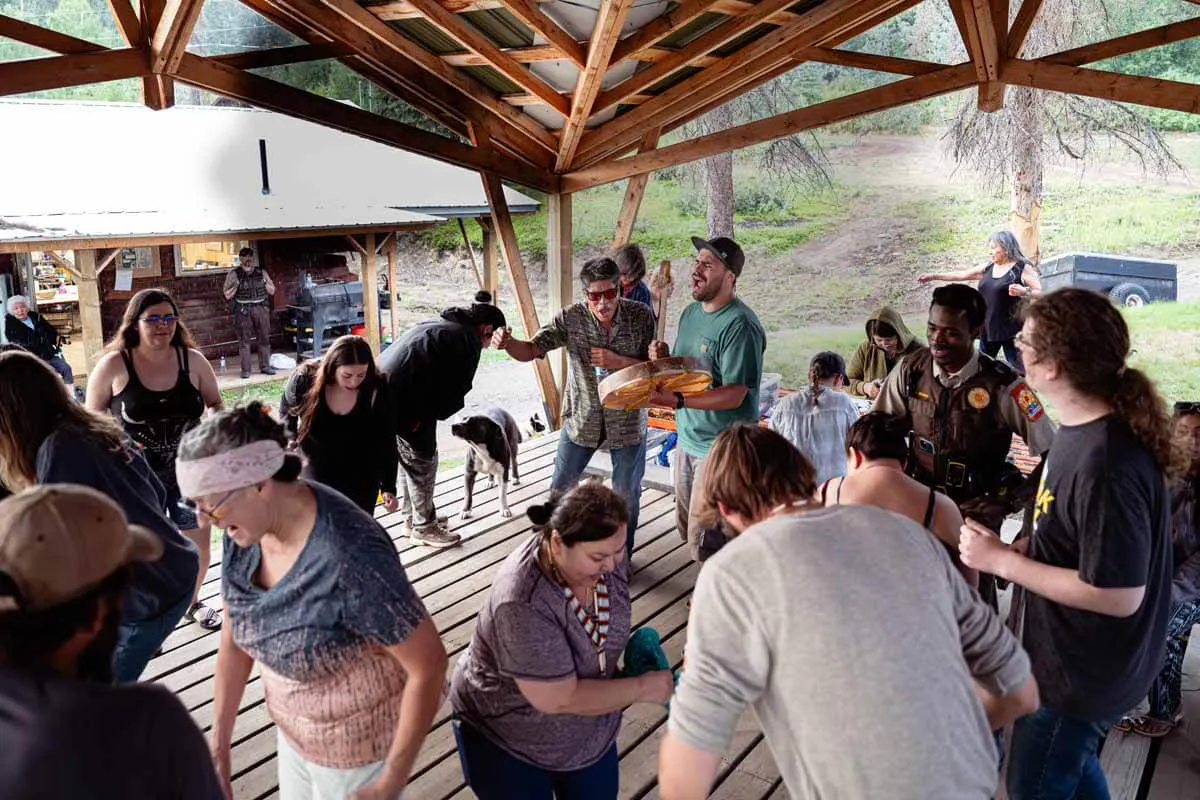
Songs and steps that have followed the river for generations.
I first heard about the salmon collapse from my friend Jazmyn Vent, a Koyukon Athabascan and Iñupiaq who grew up along the Koyukuk and Yukon Rivers. She works with the Yukon River Inter-Tribal Fish Commission and co-founded the nonprofit No Ambler Road. Her work centers on Indigenous justice, environmental advocacy, and subsistence rights—on ensuring that decisions about land and water are not made without the voices of those who have lived with them since time immemorial.
When she told me that communities had been banned from subsistence salmon fishing while industrial pollock trawlers continued operating with significant salmon bycatch, the contradiction felt almost impossible to hold. How could those most dependent on the river be asked to carry the weight of its collapse?
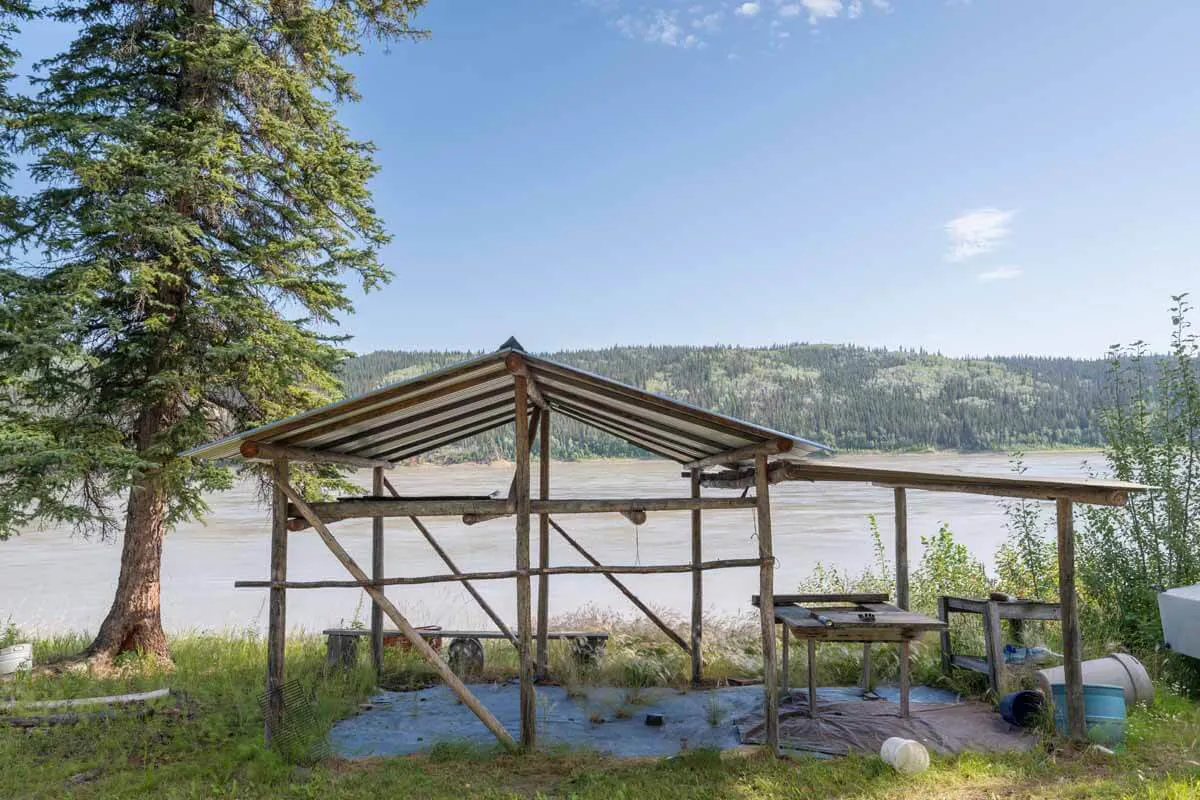
Empty fish racks on the upper Yukon.
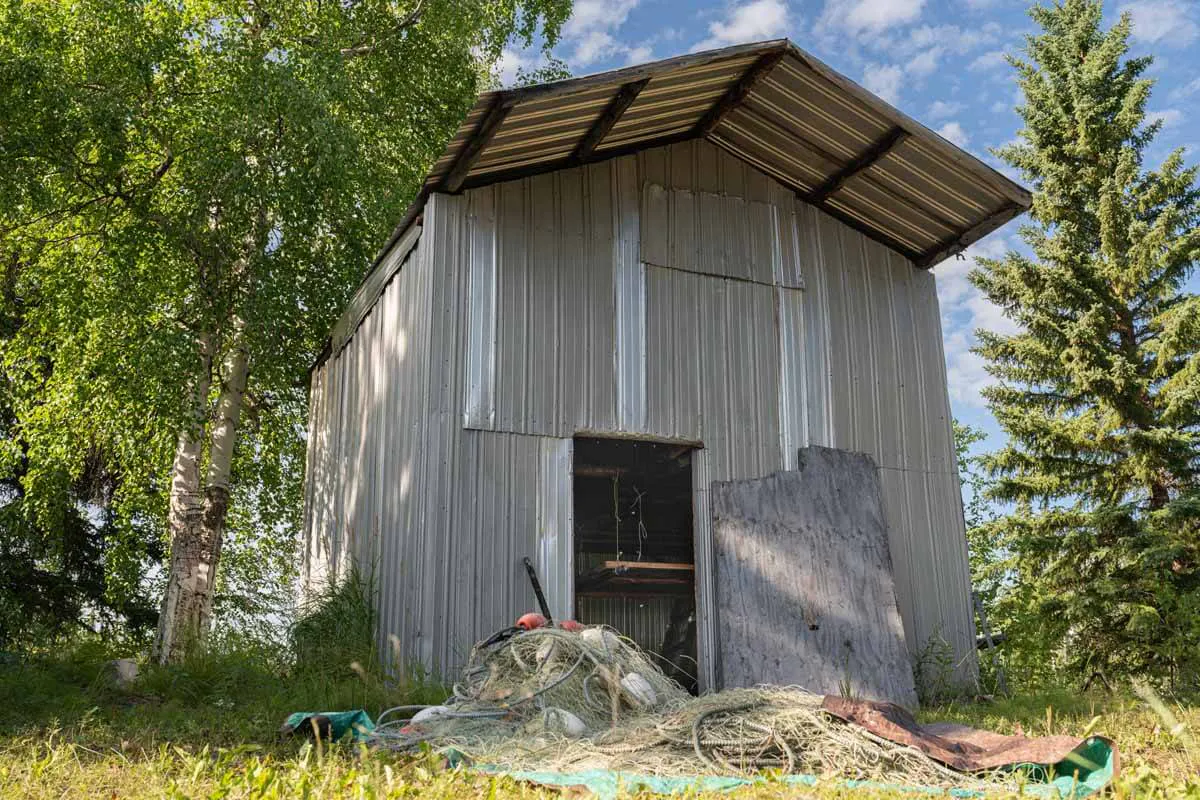
Once central to subsistence life, this smokehouse now stands empty under the subsistence ban.
We began tracing the decline of Chinook and Chum salmon in Western Alaska, but it quickly became clear that numbers alone could not explain what was unfolding. Reports and meeting minutes described trends, but not loss. So we changed perspective: if the river had fallen silent, we would have to enter it—listen along its banks, in camps, in villages, to those whose lives are inseparable from its flow.
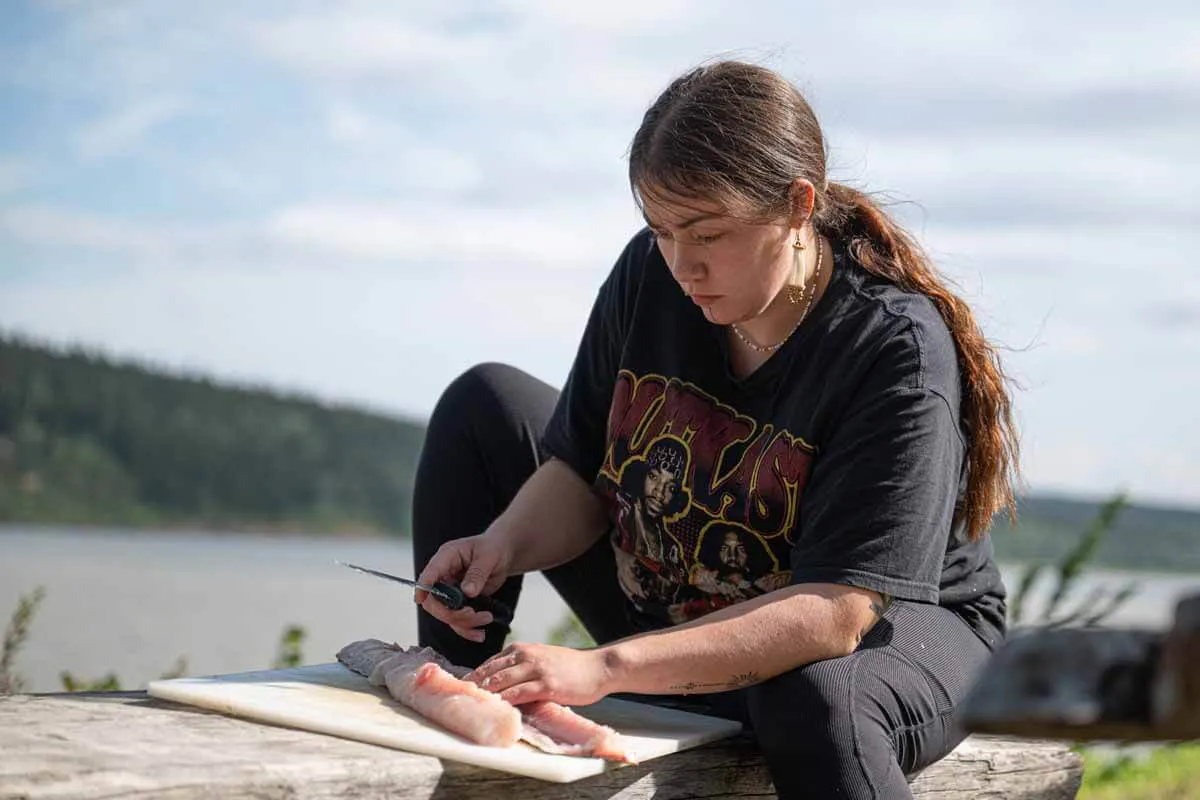
Food sovereignty in practice: even without salmon, processing other fish sustains the community and its bond to the river.
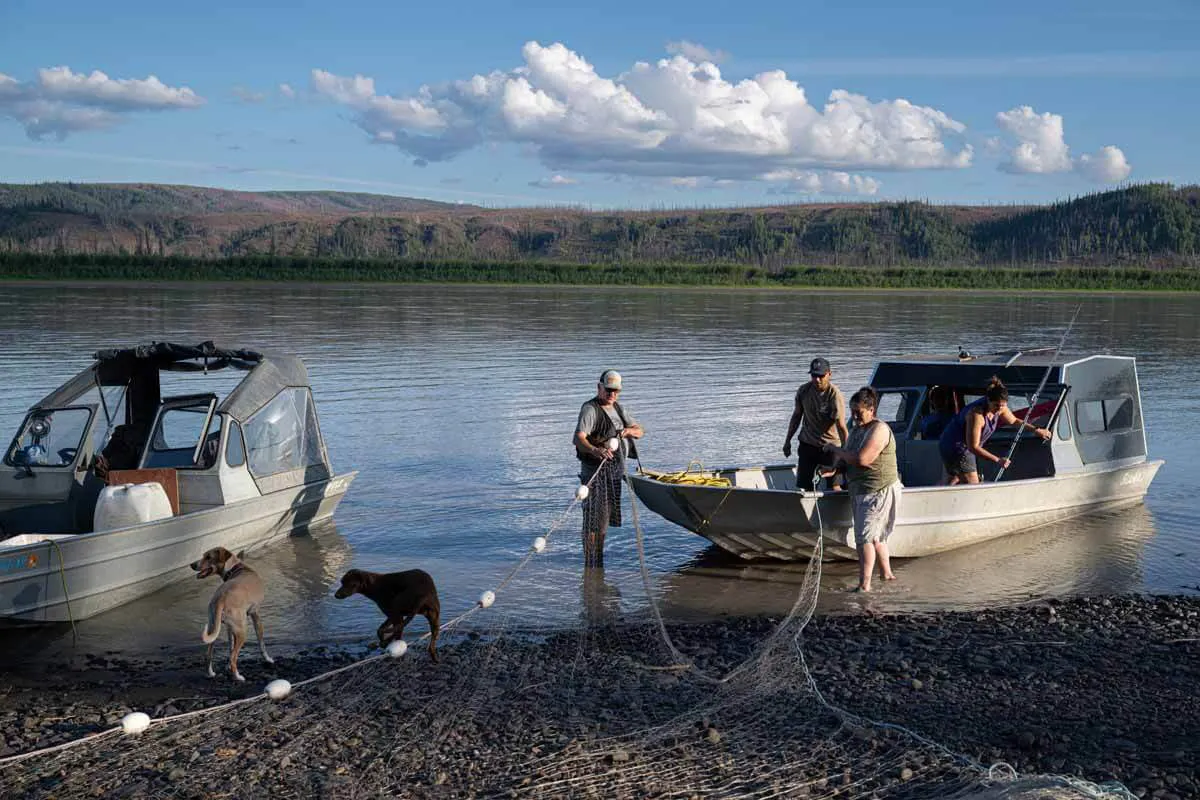
A family handles a fishing net along the Yukon, where subsistence life persists amid restrictions.
Travel in rural Alaska is slow and fragmented. Movement between communities usually means small planes or boats, shaped entirely by weather and distance. We chose a different approach: packrafts. They allowed us to move with the river itself, to stop where conversations or curiosity pulled us ashore, and to travel without a fixed schedule or external rhythm—carrying everything we needed with us and keeping our footprint as small as possible.
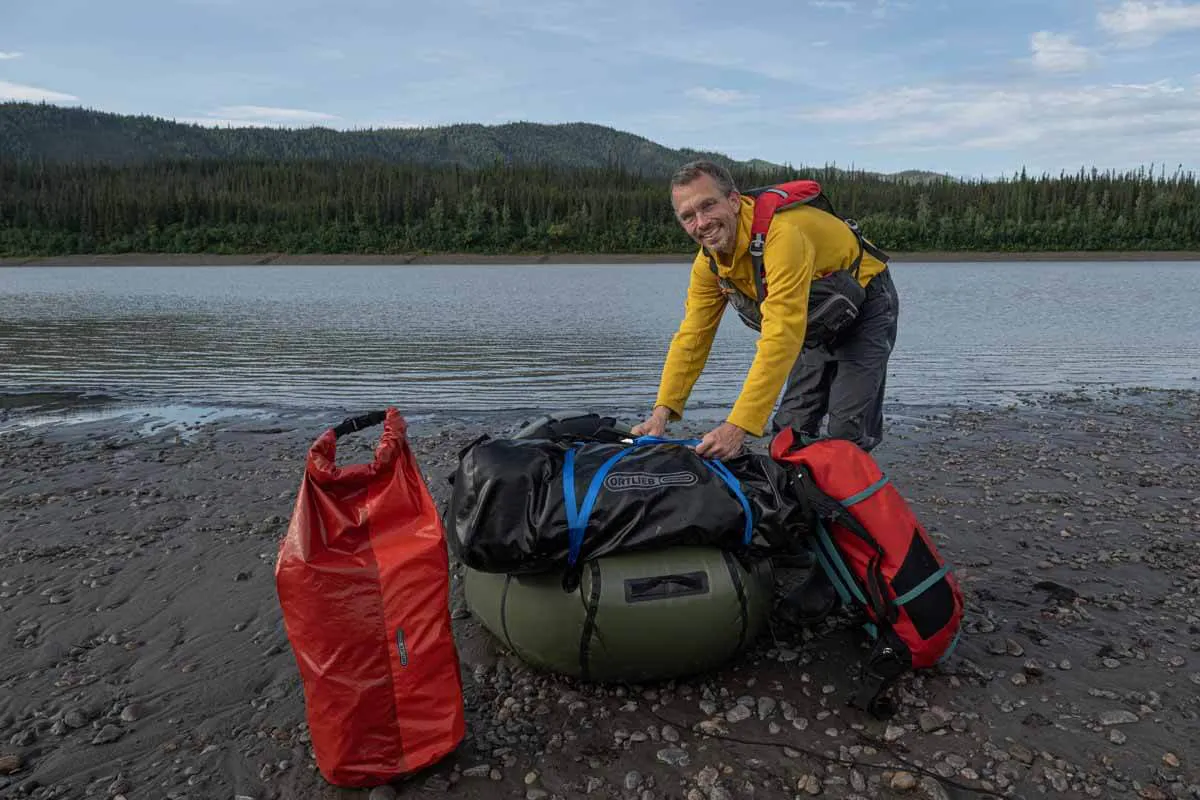
Packing up for the next stretch of river.
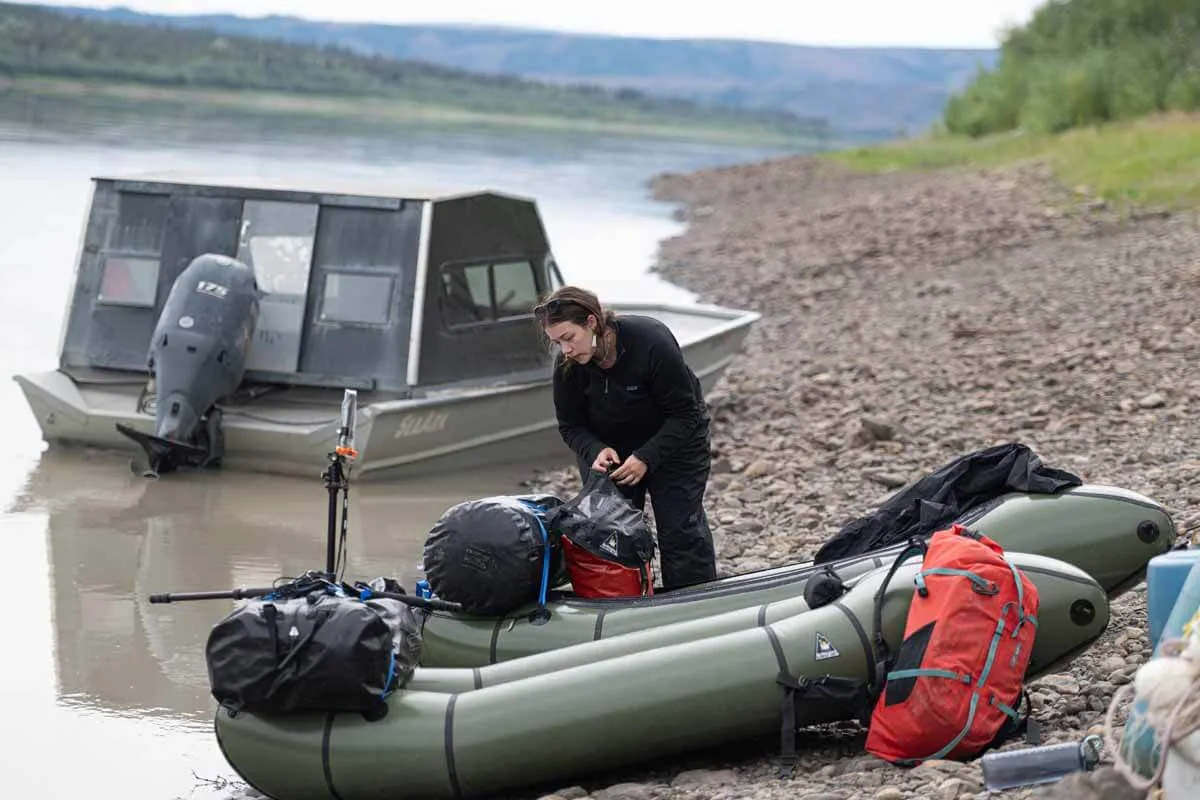
Stopping along the bank to talk with residents at their riverside camp.
Our journey began at the bridge where the Yukon meets the Dalton Highway. From there, we drifted downstream for more than ten days, hoping to speak with hunters, elders, and families about what the salmon collapse meant in everyday life. Everything we carried with us had to be enough; everything we encountered had to be met on its own terms.
From a paddling perspective, the Yukon is not technically demanding. Its challenge lies in scale. At times, the river stretches more than a kilometer wide, where even moderate wind can raise heavy waves. The current often runs at 6–8 kph, and a moment of inattention can mean missing a landing by hundreds of meters. Entire trees—sweepers—drift just beneath the surface, reminders that the river is never still, even when it appears calm.
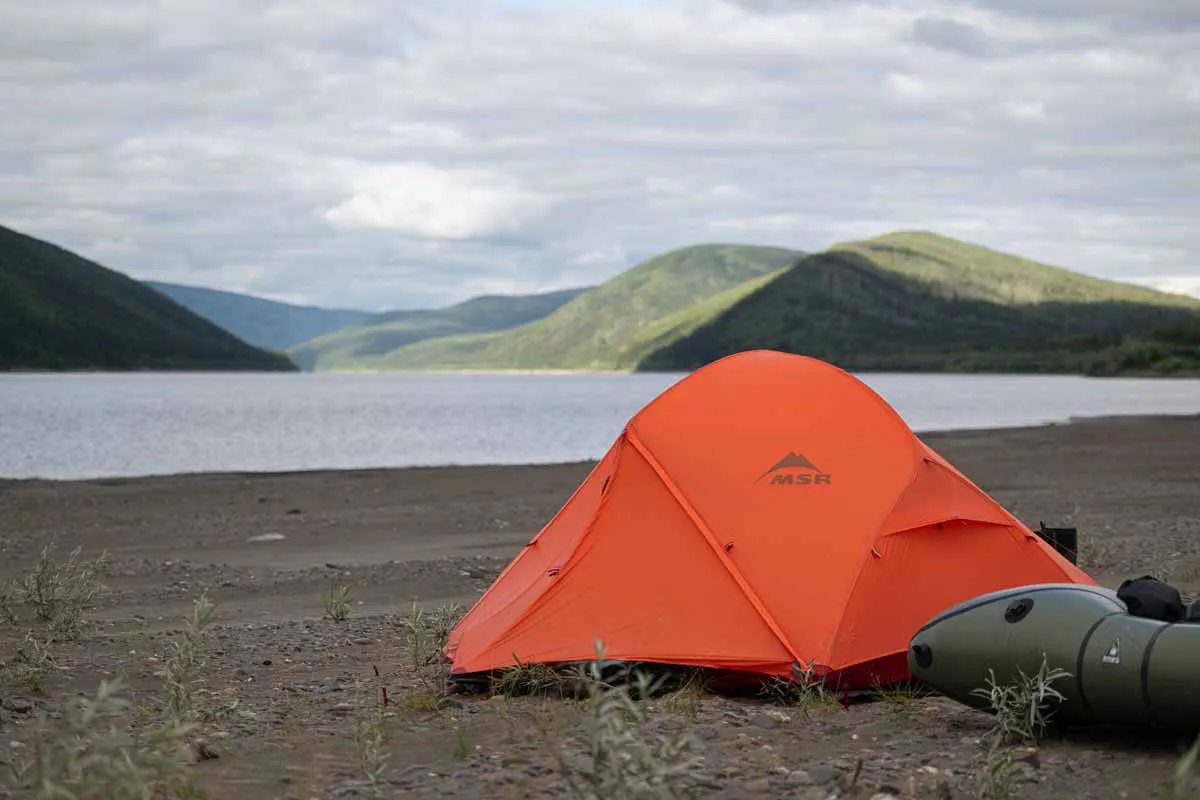
A night’s camp on a small island in the Yukon River.
In our case, the river needed only a few hours to make that clear. A fast-building thunderstorm forced us to fight for the bank, waves rising sharply, visibility collapsing. Rain filled the boats so quickly that even once ashore, they were too heavy to empty. I cannot imagine the outcome had we not reached land.
After that, the Yukon settled again, though never fully. Wind remained constant, unrelenting in its variability, exhausting in keel-less boats. But over time, the river also taught rhythm: when to move, when to pause.
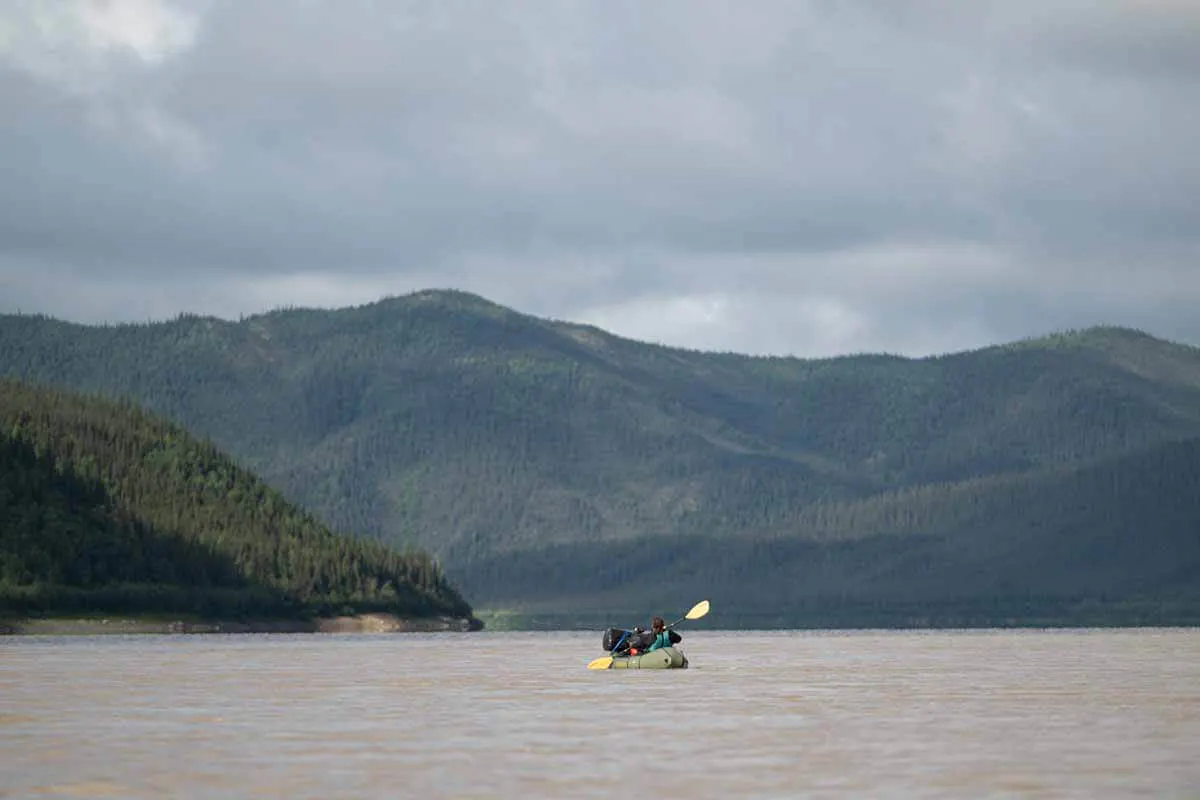
Following the river’s rhythm, traveling downstream.
Any pause quickly became conversation. At camps or when passing motorboats—often carrying relatives or friends of Jazmyn—we exchanged news: weather, conditions, family updates. Yet the conversation almost always returned to the same center: the salmon collapse and the subsistence fishing ban.
People spoke of a river that had sustained them “since time immemorial,” and of being cut off from it. Food sovereignty, they emphasized, is inseparable from Indigenous culture. When access to traditional foods is lost, so too are practices, knowledge, and the ability to pass them on. The loss is not only nutritional—it is relational and spiritual.
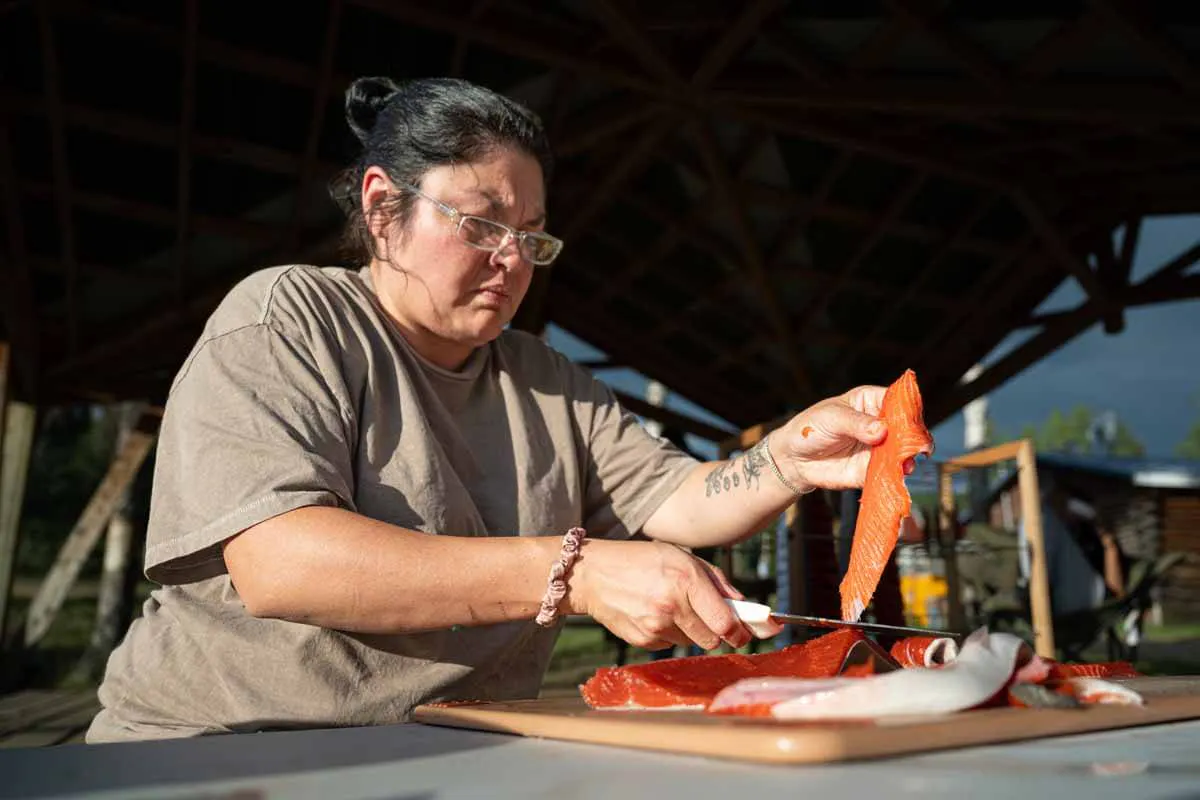
Filleting fish is not just work here. It is relation, responsibility, and memory.
The absence of salmon is also reshaping the land itself. In one village, we heard repeated accounts of hungry bears breaking into cabins, behavior locals said had become far more common since fish numbers declined. The river’s imbalance radiates outward.
A day later, we experienced that shift ourselves. After a long stretch of paddling, we camped on a small island, too exhausted to continue against the wind. But as soon as camp was set, Jazmyn noticed a fresh bear track in the sand. Minutes later, she spotted the animal itself—a large grizzly moving through nearby brush circling our campsite.
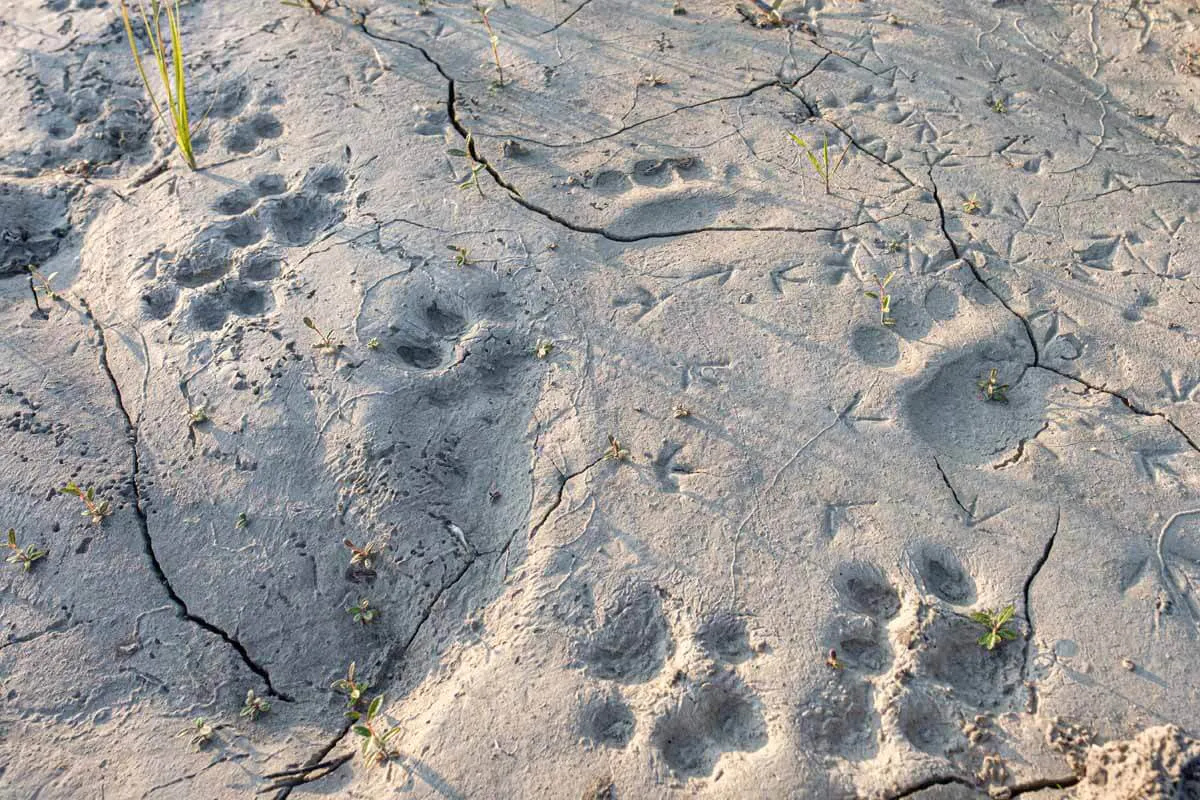
Bear and wolf tracks intersect along the banks of the Yukon River.
Camp dissolved into a blur of motion. Everything went back into dry bags and boats with practiced urgency, bear spray in hand, attention sharpened to every sound. Only once we were back in the main current, the island shrinking behind us, did the tension release.
Further downstream, we spent several days in villages and fish camps, listening. Alongside grief, we also heard refusal: a determination not to accept loss as final. One person spoke of holding industrial actors accountable, particularly trawler bycatch, and of restoring balance between salmon, river, and people. A young woman added that the crisis, painful as it is, had also reinforced community bonds and responsibility toward the river. “Healing the salmon,” she said, “is part of healing ourselves.”
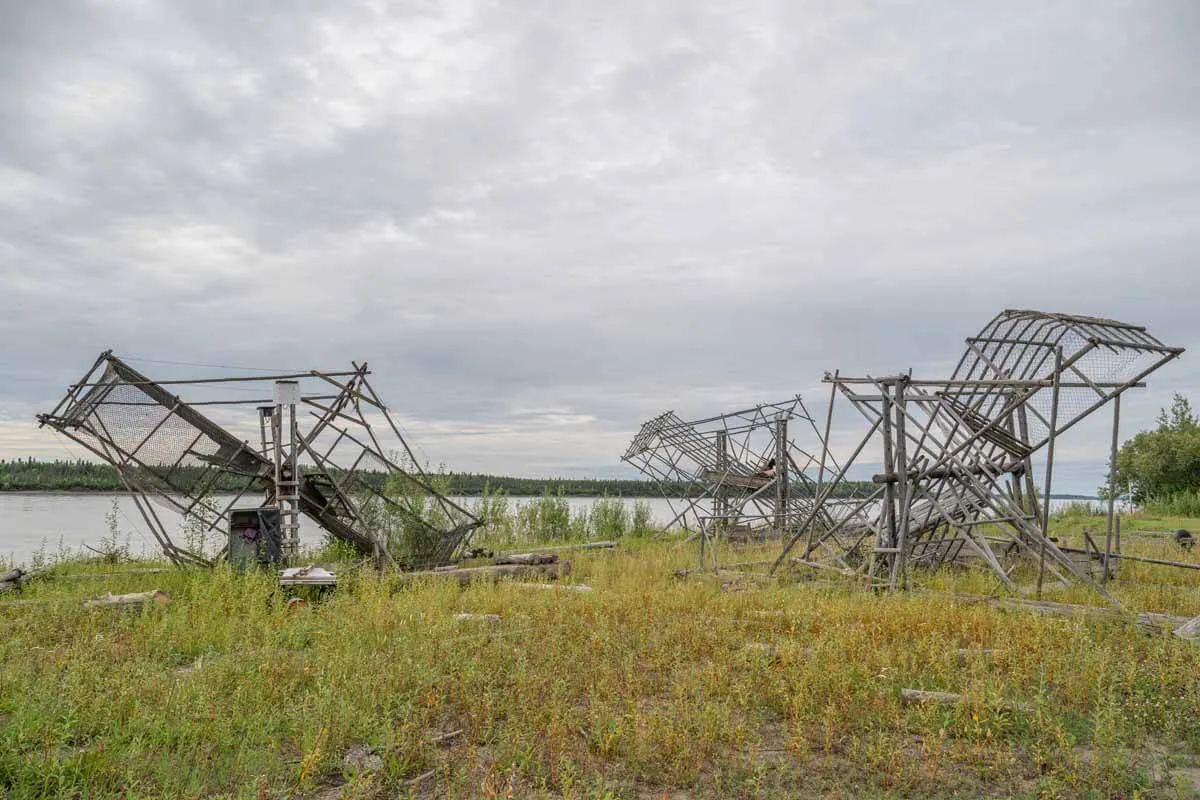
Once central to subsistence fishing, these abandoned fish wheels now form what residents call the “fish wheel cemetery.”
For Alaska Native communities, salmon are not a resource but a relation. Their collapse is not only ecological, but cultural, spiritual, and social. It disrupts food systems, knowledge transmission, and the continuity between generations. It alters how communities relate to land and water, and how they understand themselves within it.
This crisis is intensified by a fisheries regime that prioritizes industrial extraction over subsistence life. Massive pollock trawlers—feeding global markets—catch salmon as bycatch, which is largely discarded. Meanwhile, Indigenous subsistence fisheries are often the first to be restricted when stocks decline. The imbalance is structural: those least responsible for the collapse bear its immediate consequences.
Many here see this as part of a longer pattern shaped by colonial continuity in resource governance—where Indigenous use is constrained first, while industrial extraction is maintained as economically essential.
What unfolds here is more than environmental decline. It is a regime shift—ecological and political at once—that exposes a management system still built on extraction rather than relation. Recovery, many here argue, will not come through quotas alone, but through sovereignty: the ability of Indigenous peoples to govern the waters that have sustained them for millennia.
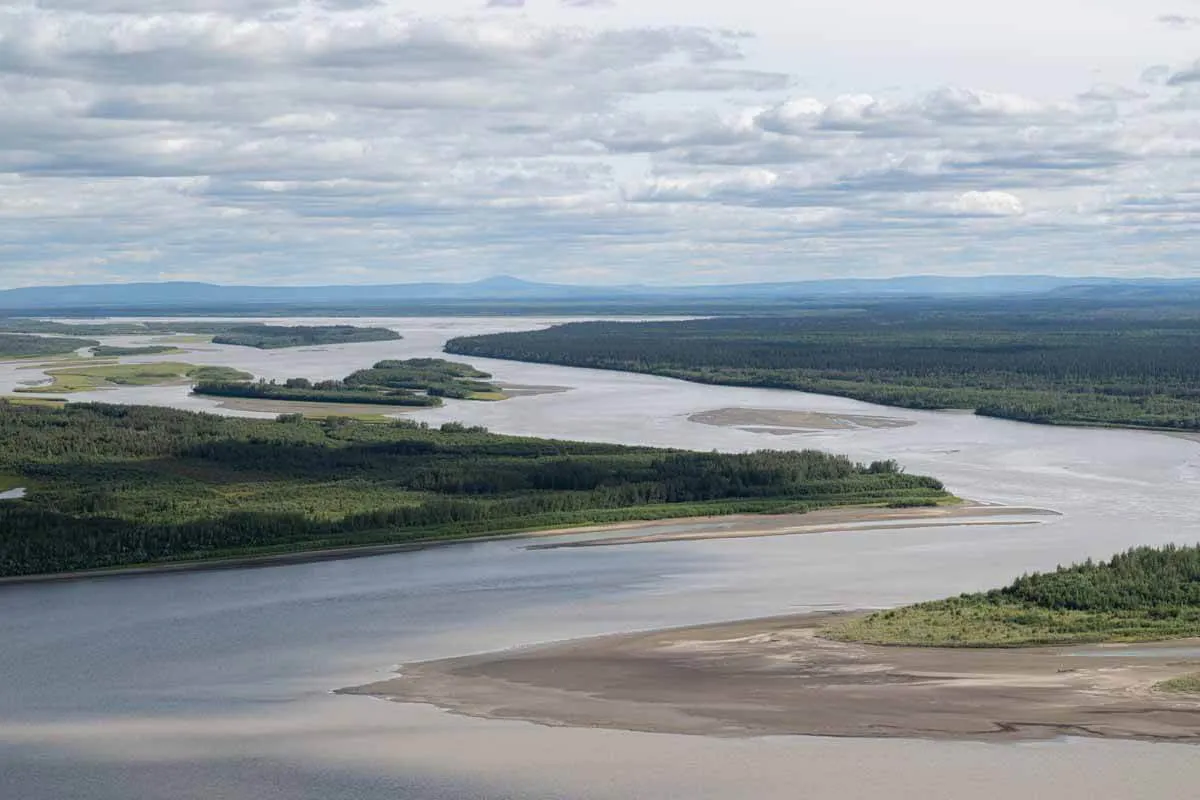
The confluence of the Yukon and Tanana rivers in Interior Alaska.
After nearly two weeks on the river, the final stretch felt quieter. Looking back, the pattern of what we had seen became clear—not as isolated stories, but as a single, continuous condition.
The salmon collapse is not only a failure of ecology. It is also a failure of listening.
And perhaps the most important lesson of the river is this: understanding does not emerge from distance, reports, or data alone. It emerges from presence—from moving through the places where loss is not abstract, but lived.